When Nepal Lights Up: The Story of Tihar, Deepawali and the Many Ways the Country Celebrates the Festival of Light
Five days, five stories: The heart of Tihar
There is something special about Nepal during Tihar. As autumn arrives, the markets become colourful, homes are cleaned and decorated, and the smell of marigold flowers and freshly prepared sweets fills the streets. Children begin practising their Deusi and Bhailo songs, families prepare for gatherings, and shops fill with oil lamps, flowers and festive decorations.
As evening falls, small lights begin appearing in doorways, windows and courtyards. One house lights a diya, then another follows. Before long, entire neighbourhoods seem to glow.
This is Tihar, one of Nepal's most loved festivals. Also known as Deepawali or Dipawali in many communities, it is celebrated over five days and holds a special place in the country's cultural and religious life.
For some, Tihar is a time to worship Goddess Laxmi and pray for prosperity. For others, it is about animals, family relationships, music and community gatherings. Across Nepal, the way people celebrate may differ, but the excitement and warmth of the festival can be felt everywhere.
Five days of Tihar and the traditions behind them
Tihar is traditionally celebrated over five days, with each day having its own significance.
Kaag Tihar: Beginning with the crow
The festival begins with Kaag Tihar, dedicated to crows. In Hindu tradition, crows are believed to be messengers associated with Yama, the god of death.
Early in the morning, families place food and grains outside their homes for the birds. It is a simple ritual, but one that reflects the importance given to living creatures in Nepali traditions.
Kukur Tihar: A day for our most loyal companions
The following day belongs to dogs. Whether they are household pets, street dogs, or working animals, they are treated with special affection.
People place marigold garlands around their necks, apply tika to their foreheads, and offer them food. Dogs are traditionally associated with Yama and are also regarded as loyal companions and guardians.
Kukur Tihar has become one of the most recognisable parts of Nepal's celebrations. Photographs of dogs wearing colourful garlands often travel around the world, showing a different and beautiful side of the festival.
Gai Tihar and Laxmi Puja: When every home lights up
The third day is among the most important days of Tihar. In the morning, cows are worshipped with flowers, tika, and food. In Hindu tradition, the cow represents motherhood, nourishment, and prosperity.
By evening, the preparations for Laxmi Puja begin. Families clean their homes, decorate entrances and prepare their prayer spaces to welcome Goddess Laxmi, who is worshipped as the goddess of wealth and prosperity.
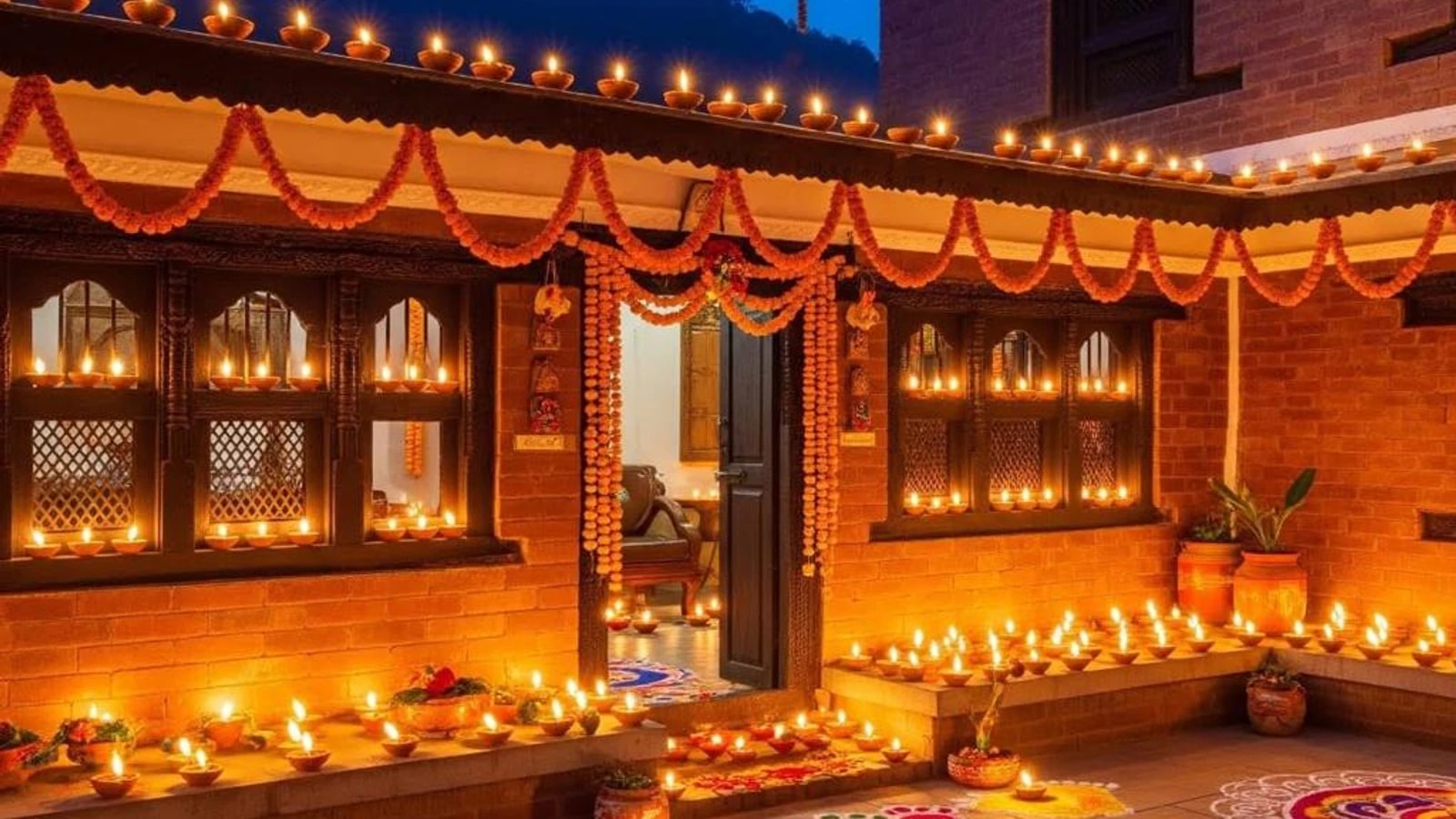
Rows of oil lamps are placed outside houses, while candles and colourful electric lights brighten windows and rooftops. Rangoli designs decorate entrances, and in some households, small footprints are drawn towards the prayer room to symbolise the arrival of the goddess.
It is one of those evenings when even familiar streets look different. Families gather for prayers, children admire the decorations and neighbours exchange greetings.
Goru Puja and Mha Puja: Honouring life and tradition
The fourth day is celebrated differently across communities. Many families worship oxen, recognising their contribution to agriculture and rural life. Some communities also observe Govardhan Puja, remembering the story of Lord Krishna lifting Mount Govardhan to protect villagers.
In the Kathmandu Valley, the Newar community observes Mha Puja, a unique tradition that means worship of the self.
During the ceremony, family members sit before specially prepared mandalas and receive ritual offerings. The occasion is dedicated to one's own existence, health, and well-being.
Mha Puja also marks the beginning of Nepal Sambat, the traditional Newar calendar. For the Newar community, it is an important occasion that connects religious belief, cultural identity, and family traditions.
Bhai Tika: The bond between brothers and sisters
The final day of Tihar is Bhai Tika, a celebration of the relationship between brothers and sisters.
Sisters prepare a special place for their brothers, apply colourful tika to their foreheads and place garlands around their necks. In many families, seven-coloured tika, known as Saptarangi tika, is used. Sisters pray for their brothers' good health, happiness and long lives.
Brothers also offer gifts, money and blessings to their sisters.
For many families, Bhai Tika is one of the most emotional occasions of the festival. Brothers and sisters who live in different cities or countries try to come together, even if it means travelling long distances.
Sometimes, a simple conversation over a meal or a few hours spent together becomes the most memorable part of the celebration.
How different parts of Nepal celebrate Tihar
Although Tihar is celebrated throughout Nepal, local traditions, languages, and lifestyles give the festival a different character in different regions.
Kathmandu Valley: A beautiful mix of tradition and modern celebrations
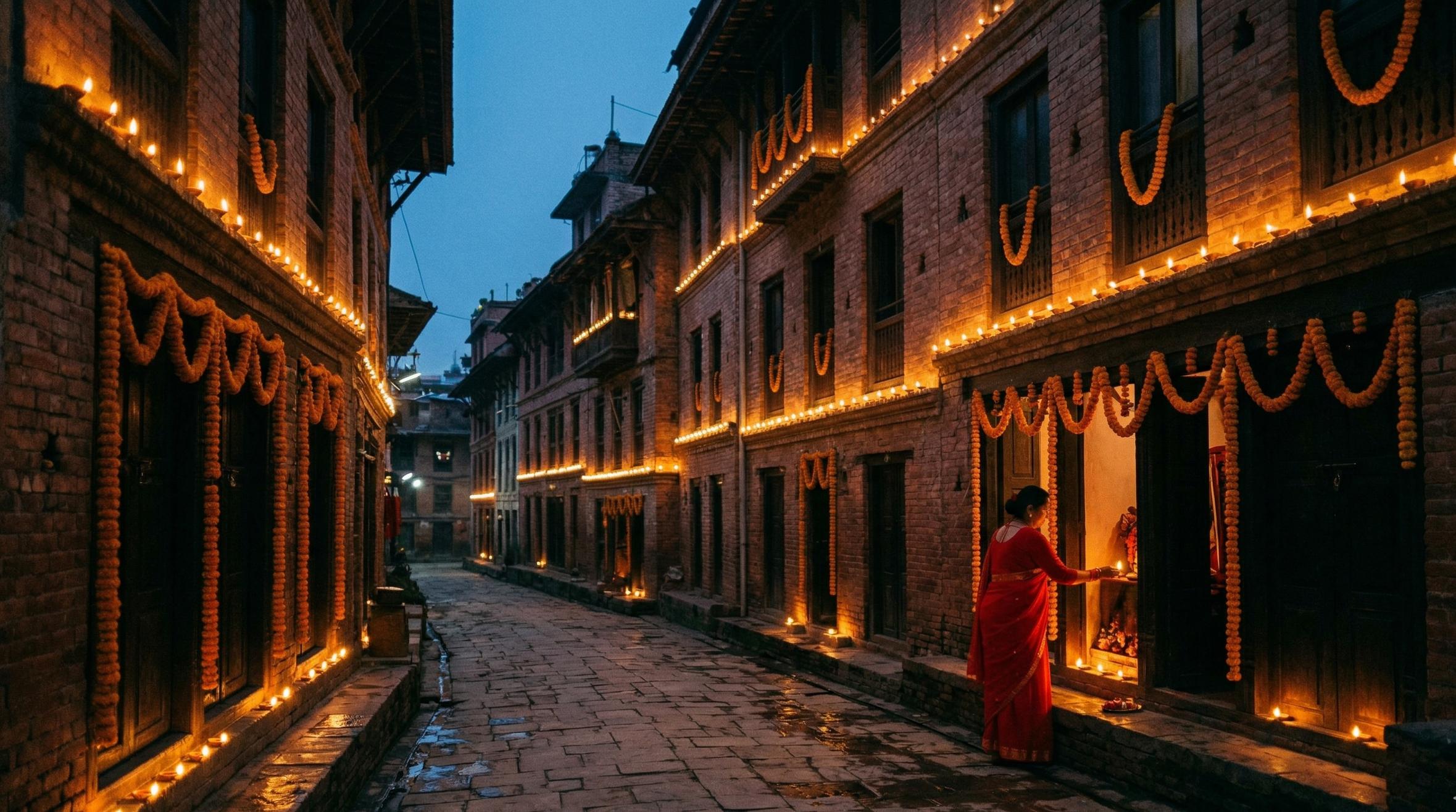
In Kathmandu, Lalitpur and Bhaktapur, Tihar brings historic streets, temples and traditional courtyards to life. Houses are decorated with marigold garlands and oil lamps, while families prepare for Laxmi Puja and other rituals.
The Newar tradition of Mha Puja makes the celebrations particularly special in the Valley. Families gather to perform the ceremony, worship themselves, and welcome the beginning of Nepal Sambat.
In the old settlements of Bhaktapur and Patan, traditional architecture and festive decorations create a beautiful atmosphere. Modern electric lights have become common too, but many households continue to follow rituals passed down through generations.
Madhesh Province: Deepawali and the warmth of Mithila
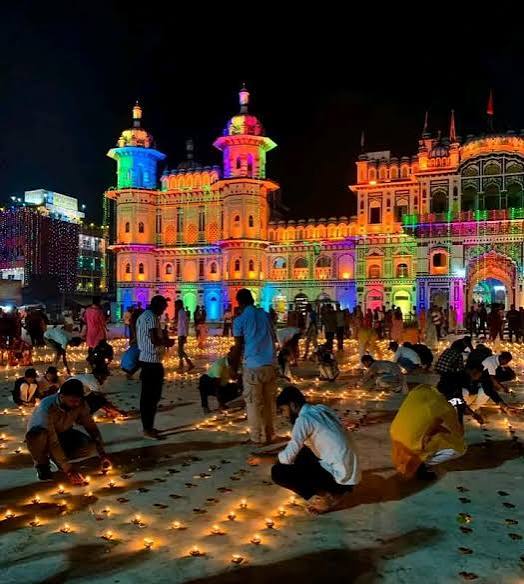
In Madhesh Province, many people commonly call the festival Deepawali or Dipawali. Across districts such as Dhanusha, Mahottari, Sarlahi, Siraha, Saptari, Rautahat, Bara and Parsa, families celebrate with Laxmi Puja, traditional food, decorated courtyards and rows of oil lamps.
One of the most beautiful features of the region's celebrations is Mithila art. Women decorate the entrances and courtyards of their homes with aripan, traditional designs made using rice paste and other natural materials.
These designs are an important part of Mithila's artistic and cultural heritage. Some are created for religious occasions, while others carry traditional symbols associated with prosperity and good fortune.
Markets become busy as families shop for flowers, sweets, clothes, and earthen lamps. Homes are cleaned and decorated, relatives visit one another, and families gather for prayers and meals.
Deepawali also comes close to Chhath in the festive calendar. For many families in Madhesh, this period is especially important because it brings several days of religious observances and family gatherings.
Eastern Nepal: Deusi and Bhailo bring communities together
In eastern Nepal, Tihar is closely associated with music, dance and community celebrations.
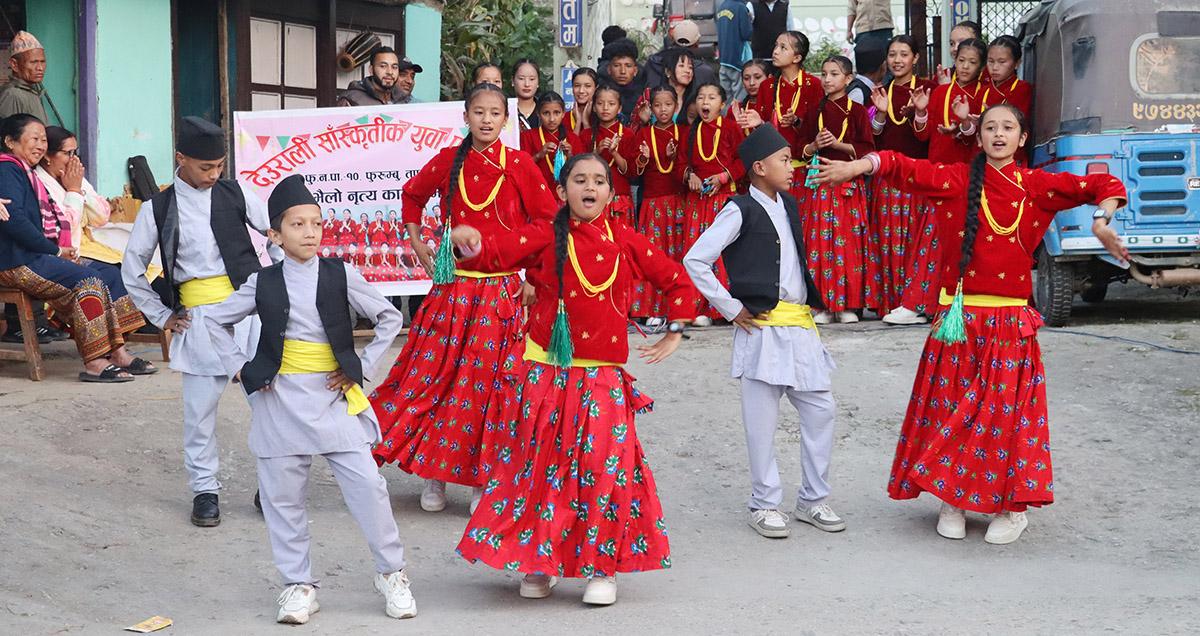
As evening arrives, groups of children and young people visit homes, singing Deusi and Bhailo songs. They carry traditional musical instruments, dance and offer blessings to the families they visit.
In return, households welcome them with sel roti, sweets, fruits or money. In some places, the money collected is used for community programmes, social activities and charitable work.
The songs have changed over time. Traditional folk music now shares space with modern melodies and creative performances. Young people often add their own style, but the excitement of visiting neighbours and celebrating together remains the same.
The hills and mountain communities: A time to return home
In Nepal's hill and mountain settlements, Tihar is often a time for family reunions.
People working in cities or living away from their villages try to return home during the festive season. Children visit grandparents, relatives gather around the family kitchen, and neighbours exchange food and greetings.
The celebrations may be simpler in remote villages, but the importance of family and community remains strong. Traditional oil lamps, homemade food and familiar songs often make these gatherings particularly memorable.
For people who spend most of the year away from home, Tihar offers a reason to return to the places where their childhood memories began.
Karnali and Sudurpashchim: Local customs and family celebrations
In Karnali and Sudurpashchim, families celebrate Tihar through a combination of familiar rituals and local traditions.
Laxmi Puja, animal worship, and Bhai Tika are important parts of the festival. Deusi and Bhailo performances bring young people into village streets and courtyards, while local folk songs and instruments add a regional flavour.
For many people who have moved away for education or employment, the festival is also an opportunity to reconnect with their families.
The celebrations may vary between communities, but the feeling of togetherness remains central.
Deusi and Bhailo: The songs that make Tihar special
Ask anyone about their childhood memories of Tihar, and there is a good chance Deusi and Bhailo will be part of the answer.
As night falls, groups of children and young people move from one house to another, singing traditional songs and performing dances.
The sound of madal, clapping and cheerful voices fills the neighbourhood. Families come outside to welcome the performers, offer food and give them money.
Traditionally, Bhailo has often been associated with girls and women, while Deusi has been associated with boys and men. Today, both are performed by people of different ages and genders.
For children, it is one of the most exciting parts of the festival. For older people, it brings back memories of their own childhood. Many communities also use the opportunity to collect money for schools, social work and local development.
More than anything, Deusi and Bhailo bring neighbours together. People open their doors, share food and spend time with one another.
The food that makes Tihar feel like home
No Nepali festival feels complete without food, and Tihar is no exception.
One of the most familiar sights during the festival is sel roti being prepared in family kitchens. This traditional ring-shaped bread, made from rice flour, is usually prepared in large quantities and shared with relatives and visitors.
Families also prepare sweets, fruits, traditional snacks and special meals. Food is offered during prayers and served to guests who visit during the celebrations.
In Madhesh, regional sweets and festive dishes bring local flavours to the occasion. Newar families in the Kathmandu Valley prepare their own traditional foods, while households in the hills and mountains use local ingredients and family recipes.
Every region has something different to offer, but the happiness of sharing a meal remains the same.
Flowers, lights and the beauty of Tihar
Marigold and makhamali flowers are among the most recognisable symbols of Tihar. Their garlands decorate houses, temples, vehicles and animals.
Orange and yellow flowers hang from doorways, while colourful rangoli and aripan designs brighten courtyards. Traditional clay lamps, known as diyos, are placed near windows and entrances.
In recent years, electric lights and decorative lanterns have also become popular. In Kathmandu, historic squares and narrow streets look especially beautiful during the festival. In Madhesh, village courtyards and homes are filled with flowers and lamps. In the hills, lights scattered across settlements create a memorable view after sunset.
Much of this beauty comes from the time and effort families put into preparing their homes.
How Tihar is changing with time
Like many traditions, Tihar has changed over the years.
Deusi and Bhailo songs that were once performed mainly with traditional instruments are now accompanied by modern music and microphones. Young people share their performances on social media, while families living abroad celebrate Bhai Tika through video calls when travelling home is not possible.
Community organisations also organise cultural programmes and use festive gatherings to support schools, social causes and local development.
There is also greater awareness about celebrating responsibly. People are encouraged to avoid excessive firecrackers, reduce plastic waste, protect animals from loud noises and use electrical decorations safely.
Traditions naturally change as society changes. What matters is that the values behind them continue to be respected.
More than a festival of lights
Perhaps the best way to understand Tihar is to look at the people celebrating it.
It is the family in Saptari preparing sel roti in their kitchen. It is the Newar household in Bhaktapur performing Mha Puja. It is the young people singing Deusi in the streets of Pokhara and the families in Janakpur lighting diyos in their courtyards.
It is the farmer worshipping the ox that has helped him work in the fields, the child placing a garland around a dog's neck and the grandmother teaching her grandchildren the songs she learned many years ago.
The rituals may be different, the languages may change, and the food may vary from one region to another. Yet the emotions behind the celebrations are remarkably similar.
Tihar reminds people to be grateful for their families, respect other living beings, and stay connected with their communities.
When the last diya burns out, and the decorations are taken down, what remains is much more than the memory of a festival.
It is the happiness of returning home, the warmth of family gatherings, and the feeling of belonging to a culture that has been passed down through generations.
That is what makes Tihar special. It is not just about lighting lamps. It is about keeping the light of relationships, traditions, and togetherness alive.
Photo gallery