
UN Chief Warns of Climate Catastrophe, Demands Urgent Cuts in Fossil Fuel Emissions at COP31
UN Secretary-General António Guterres has urged governments to take immediate and drastic action to reduce fossil fuel emissions, warning that climate change is worsening hunger, displacement, poverty, and global instability.
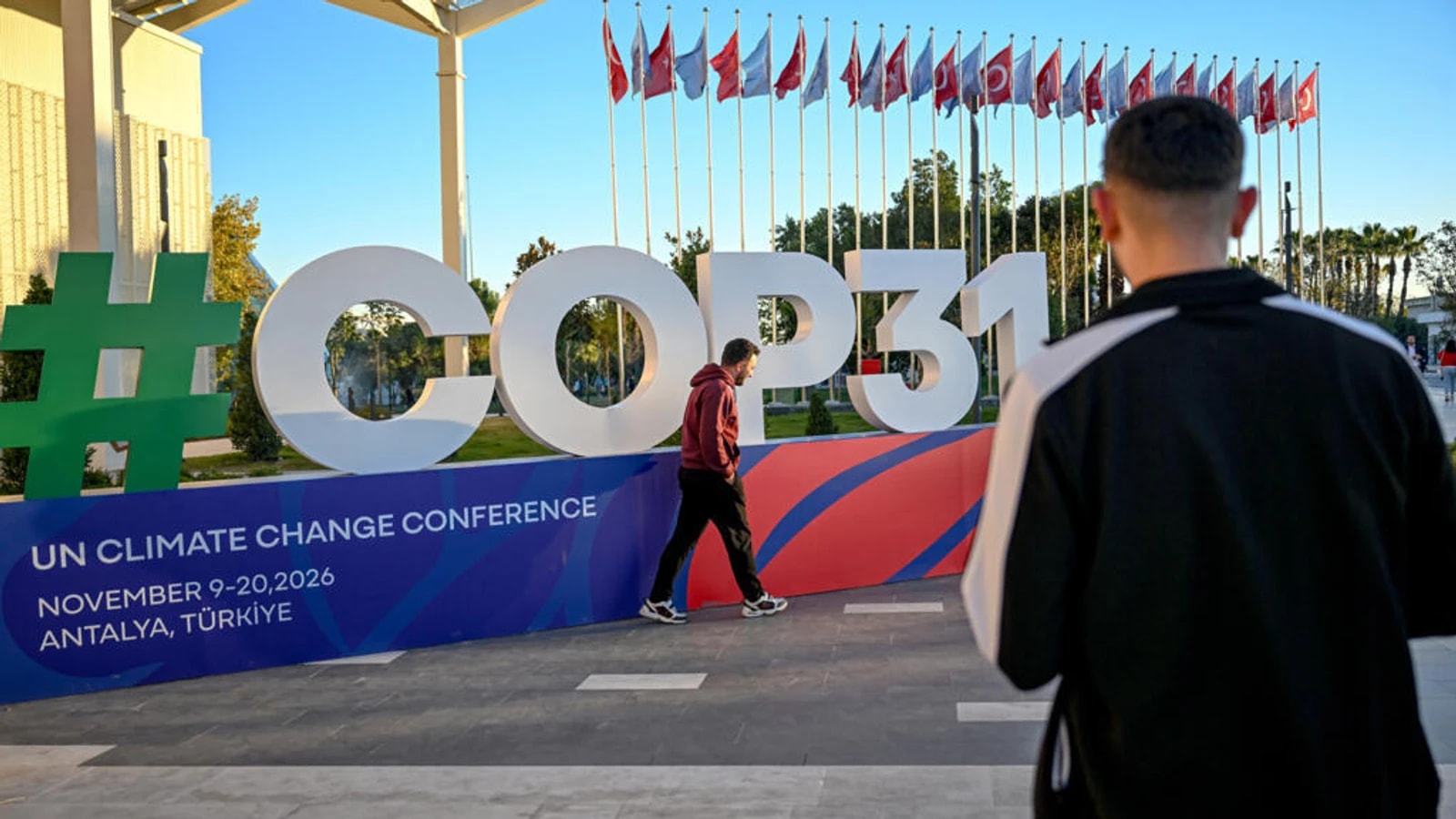
ANTALYA: United Nations Secretary-General António Guterres has issued a strong warning over the accelerating climate crisis, urging governments to make immediate and substantial reductions in fossil fuel emissions to prevent increasingly severe consequences for people and the planet.
Addressing the COP31 climate summit in Antalya, Türkiye, Guterres warned that climate change is no longer a distant environmental concern but an escalating global crisis affecting food security, livelihoods, public health and international stability.
He called for faster implementation of climate commitments, stronger cooperation among countries and a decisive shift towards cleaner sources of energy.
Guterres also warned that the consequences of global warming are being felt through extreme weather, displacement, growing poverty and increasing pressure on vulnerable communities.
Climate finance remains a major challenge
One of the central issues at COP31 has been the shortage of financial support available to developing countries.
Climate-vulnerable nations, particularly small island states and countries exposed to floods, droughts, rising temperatures and sea-level rise, have demanded greater financial assistance from wealthier economies.
These countries argue that they contribute relatively little to global greenhouse gas emissions but face some of the most severe consequences of climate change.
Guterres urged developed countries to honour existing climate-finance commitments and increase support for adaptation measures.
He warned that even a threefold increase in adaptation finance would cover less than 30 per cent of the estimated global requirement.
The funding gap remains a major obstacle for developing nations seeking to strengthen infrastructure, protect agricultural production, improve disaster preparedness and support communities affected by climate-related disasters.
Global electricity transition emerges as a key COP31 discussion
Another major issue at the summit is the growing role of electricity in the global energy transition.
Negotiators are discussing a proposed target to increase electricity's share of global final energy consumption from approximately 21 per cent to 35 per cent by 2035.
Supporters argue that greater electrification of transport, industries, buildings and other sectors could help reduce dependence on fossil fuels.
However, environmental groups have stressed that electrification must be supported by clean energy sources. Simply increasing electricity consumption without reducing the carbon intensity of power generation may not deliver the necessary emissions reductions.
The International Energy Agency has also highlighted the growing importance of electricity in the global economy and the need to accelerate investment in cleaner power systems.
Vulnerable countries demand climate justice
For developing nations, the climate debate is not limited to reducing emissions. It is also about fairness, responsibility and the resources needed to respond to climate-related damage.
Small island states face growing threats from rising sea levels, coastal erosion and extreme weather. Other developing countries are struggling with prolonged droughts, destructive floods, declining agricultural productivity and heat-related health risks.
Several vulnerable countries are calling for stronger financial mechanisms to compensate communities experiencing irreversible climate-related losses.
The debate has again highlighted differences between developed and developing economies over who should bear the financial responsibility for addressing the crisis.
Climate negotiations continue in Antalya
COP31, the 31st United Nations Climate Change Conference, is being held in Antalya from November 9 to 20, 2026.
Representatives from more than 190 countries are participating in discussions on emissions reduction, climate finance, adaptation, clean energy and international cooperation.
The departure of many world leaders following the high-level summit has opened the way for detailed negotiations among government representatives and climate officials.
The coming days are expected to be important as countries work towards common decisions on financing, energy transition and the implementation of existing climate commitments.
The summit is taking place at a critical moment, with scientific assessments warning that current national climate policies and commitments remain insufficient to keep global warming within the 1.5°C limit set by the Paris Agreement.
As negotiations continue, the central challenge remains whether governments can translate promises into practical action before the effects of climate change become even more severe.