
Aathpahariya Museum in Dhankuta Remains Closed Despite Completion of Building
A museum established to preserve the history, traditions, and cultural identity of the Aathpahariya community in Dhankuta remains unopened despite the completion of most construction work. Delays in interior arrangements, the collection of exhibits, and disagreements over its operational management have prevented the facility from welcoming visitors.
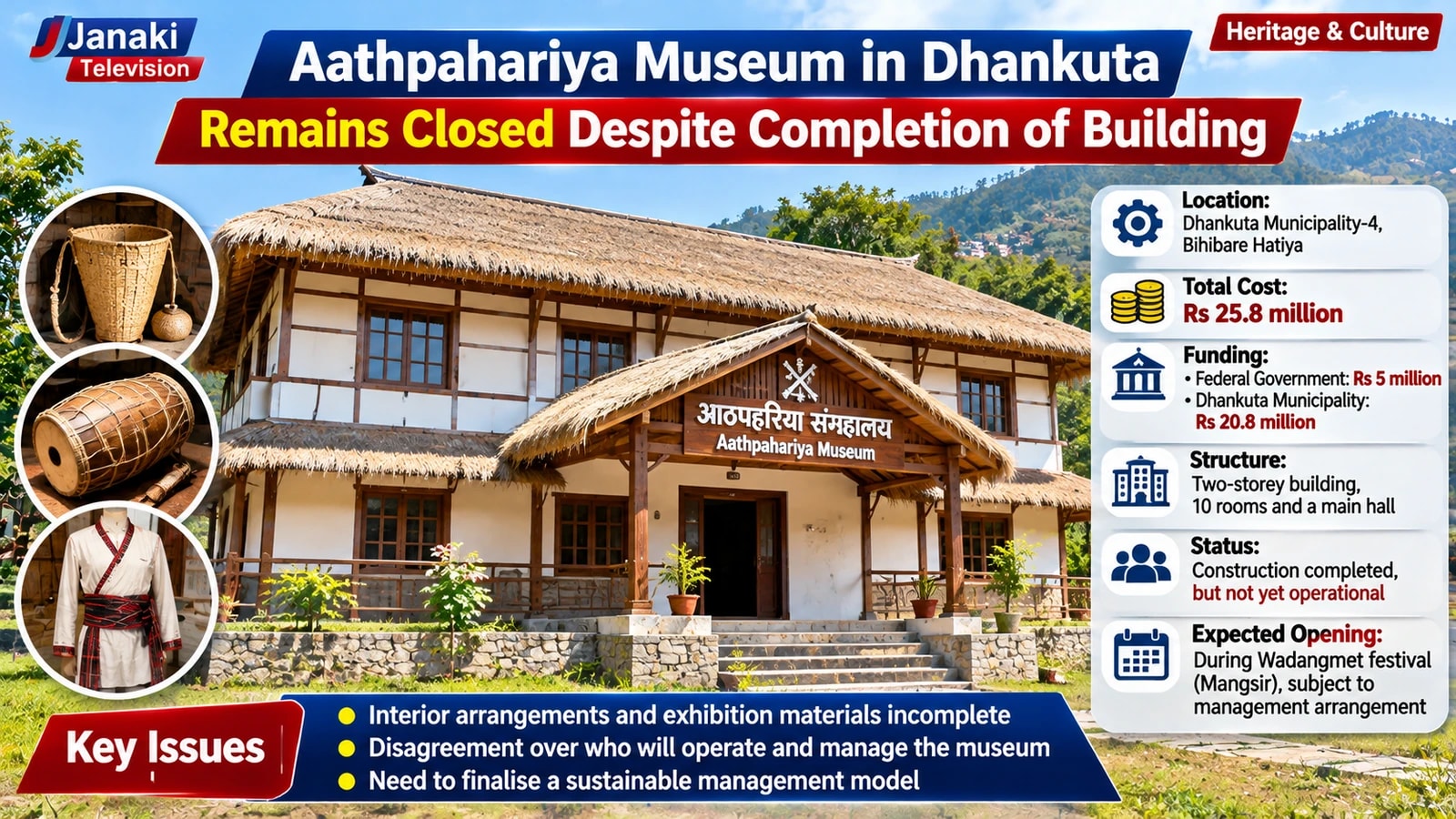
DHANKUTA: A museum designed to preserve the history and cultural heritage of the Aathpahariya community in Dhankuta has yet to open to the public, even though most of its construction work has been completed.
The delay has been attributed to incomplete interior arrangements, the collection of exhibition materials, and the absence of an agreement on who will operate and manage the museum.
The two-storey building stands on approximately three ropanis of land near Bihibare Hatiya in Dhankuta Municipality-4. It contains 10 rooms and a main hall, while its traditional thatched roof reflects elements of the community's architectural heritage.
The museum was originally expected to open during Wadangmet, one of the Aathpahariya community's major festivals, last year. However, the facility remains closed because several preparations have not been completed.
Government and Municipality Invested Rs 25.8 Million
The museum was constructed with financial support from both the federal government and Dhankuta Municipality.
The federal government allocated Rs 5 million in the fiscal year 2021/22, while the municipality contributed Rs 20.8 million. The total construction cost reached Rs 25.8 million.
Despite the completion of the main building, additional work is still required to prepare the exhibition spaces and organise the museum's collections.
The proposed displays include traditional clothing, musical instruments, agricultural equipment, household objects and items associated with the community's religious and cultural practices.
The museum is also expected to document the community's history, social customs and traditional way of life, creating a place where younger generations and visitors can learn about Aathpahariya heritage.
Preserving Traditions for Future Generations
Komal Aathpahariya, central general secretary of the Kirat Aathpahariya Society, said the museum would showcase different aspects of the community's identity.
The planned exhibition will cover traditional livelihoods, labour culture, social practices and religious beliefs. It will also include information about 22 Margathani and 52 Chule, traditional large households within the community, along with rituals and customs observed throughout different stages of life.
The collection is expected to provide visitors with a broader understanding of how the community has maintained its cultural identity over generations.
Community representatives believe that preserving these traditions in a dedicated museum will help prevent valuable cultural knowledge from disappearing as lifestyles change.
Disagreement Over Who Will Operate the Museum
While the building is largely ready, an agreement on its long-term management remains unresolved.
The municipality is considering providing an annual grant before handing over operational responsibility to the Kirat Aathpahariya Society.
However, the society has suggested that the municipality should initially operate the museum and transfer management only after the institution becomes financially sustainable.
Surya Aathpahariya, the society's central vice-president, said the museum could be opened during Wadangmet in Mangsir this year. However, the management arrangement must first be settled.
Dhankuta Municipality Information Officer Bikash Adhikari said discussions were underway to determine an appropriate management model. He also stressed the importance of documenting Aathpahariya traditions as modern lifestyles and generational changes continue to transform the community.
A Community of Around 6,000 People
The Aathpahariya community has an estimated population of around 6,000 people and celebrates three major festivals: Bishu, Nwagi and Wadangmet.
These festivals and associated cultural practices form an important part of the community's identity.
The proposed museum is expected to preserve traditional objects and practices while also creating an opportunity for visitors, researchers and students to explore the community's cultural history.
Its opening could also contribute to local tourism by adding a heritage attraction to Dhankuta's existing cultural and natural destinations.
However, the project now faces a challenge beyond construction: turning the completed building into a functioning cultural institution.
Unless the remaining exhibition preparations and management responsibilities are resolved, the museum's purpose of protecting and promoting Aathpahariya heritage will remain unfulfilled.
The community hopes the facility will finally open during this year's Wadangmet festival in Mangsir.