
US Midterm Elections: Democrats Win Control of Congress in Major Setback for Trump
Democrats have won control of both chambers of the US Congress in the November 3 midterm elections, significantly changing the balance of political power in Washington. The results are a major setback for President Donald Trump, whose Republican Party had previously controlled both the House of Representatives and the Senate.
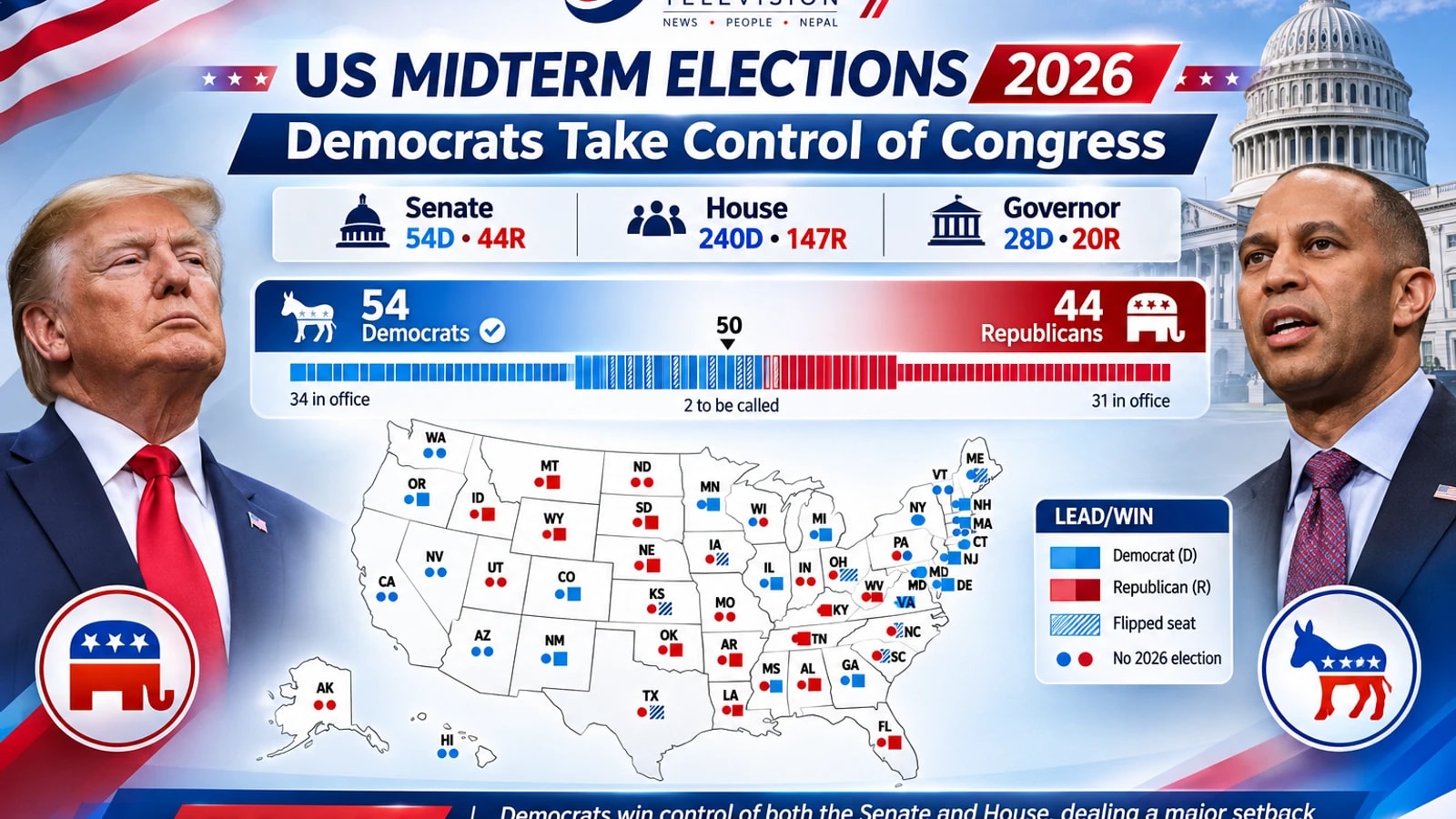
WASHINGTON: The Democratic Party has secured control of both the US House of Representatives and the Senate following the November 3 midterm elections, marking a major shift in American politics and a significant challenge for President Donald Trump's administration.
The election results have ended unified Republican control of Congress and placed Democrats in a position to influence legislation, scrutinise the administration and challenge the president's policy agenda during the final two years of his current term.
According to the Associated Press and Reuters, Democrats made substantial gains in several states that have traditionally supported Republican candidates. Their victories included Senate contests in Texas, Kansas, Iowa, Ohio, Maine, North Carolina, and South Carolina.
The outcome represents a significant change from the political landscape established after the 2024 presidential election, when Republicans secured control of the White House and both chambers of Congress.
Senate Results Mark Historic Political Changes
One of the most notable developments came in the Senate, where Democrats gained seats in traditionally Republican states.
Texas elected Democrat James Talarico, marking the first Democratic victory in a US Senate election in the state since 1988, according to election reporting.
Kansas also recorded a historic result, with Democrat Adam Hamilton securing a Senate victory. The state had not elected a Democratic senator in nearly a century.
Democrats also achieved a significant victory in South Carolina, where their candidate defeated the Republican incumbent.
The results have reshaped the Senate's political balance, giving Democrats control of the chamber and greater influence over legislation and presidential appointments.
Democrats Make Major Gains in the House
The Democratic Party also recorded substantial gains in the House of Representatives, winning more than two dozen Republican-held districts, according to Associated Press reporting.
Several victories came in districts that had supported Trump in the 2024 presidential election.
The outcome means Democrats will hold the majority in the House, where they can influence the legislative agenda, lead committees and initiate investigations into government activities.
The change is expected to make it more difficult for the Trump administration to advance legislation without negotiations with Democratic lawmakers.
Economy and Iran War Among Voters' Concerns
Economic concerns played an important role in the election campaign.
Reports from the Associated Press and Reuters identified the rising cost of living, inflation, fuel prices, and dissatisfaction with government policies among the major issues influencing voters.
The US involvement in the Iran war also became a significant political issue, with concerns about its economic consequences contributing to criticism of the administration.
President Trump acknowledged that the conflict and rising fuel prices had affected Republican candidates. He also criticised some Republican candidates following their defeats.
However, the election outcome reflected several issues, and analysts have pointed to a combination of economic concerns, dissatisfaction with government performance and changing voter preferences.
What the Results Mean for Trump's Presidency
The new congressional balance will have important consequences for the remainder of Trump's presidency.
With Democrats controlling both chambers, the party will have greater authority over congressional investigations, legislative priorities, and the consideration of government appointments.
Democratic leaders have indicated that affordability, healthcare, and government accountability will be among their priorities.
House Democratic Leader Hakeem Jeffries and Senate Democratic Leader Chuck Schumer are expected to play central roles in shaping the party's approach to the administration.
Republicans, meanwhile, will need to adjust to governing without congressional majorities. The president retains executive powers, including the ability to veto legislation, but disagreements between the White House and Congress could create political deadlock.
A New Political Phase for the United States
The 2026 midterm elections have significantly altered the political balance in Washington. The results also demonstrate how midterm voting can reshape the legislative environment even when the president is not directly seeking re-election.
For Trump, the Democratic victories mean facing a Congress controlled by the opposition during the remaining two years of his term.
For Democrats, the new majority brings greater legislative influence as well as responsibility for responding to voters' expectations.
The political impact of the election is likely to extend beyond Washington, with its consequences potentially influencing national policy debates and preparations for the 2028 presidential election.