
WHO Recommends Two New Ebola Vaccine Candidates for Clinical Trials in DR Congo
The World Health Organization has recommended adding two experimental Ebola vaccine candidates, developed by the University of Oxford and Moderna, to an ongoing clinical trial in the Democratic Republic of the Congo. The vaccines are specifically designed to target the Bundibugyo virus, which is responsible for the current outbreak.
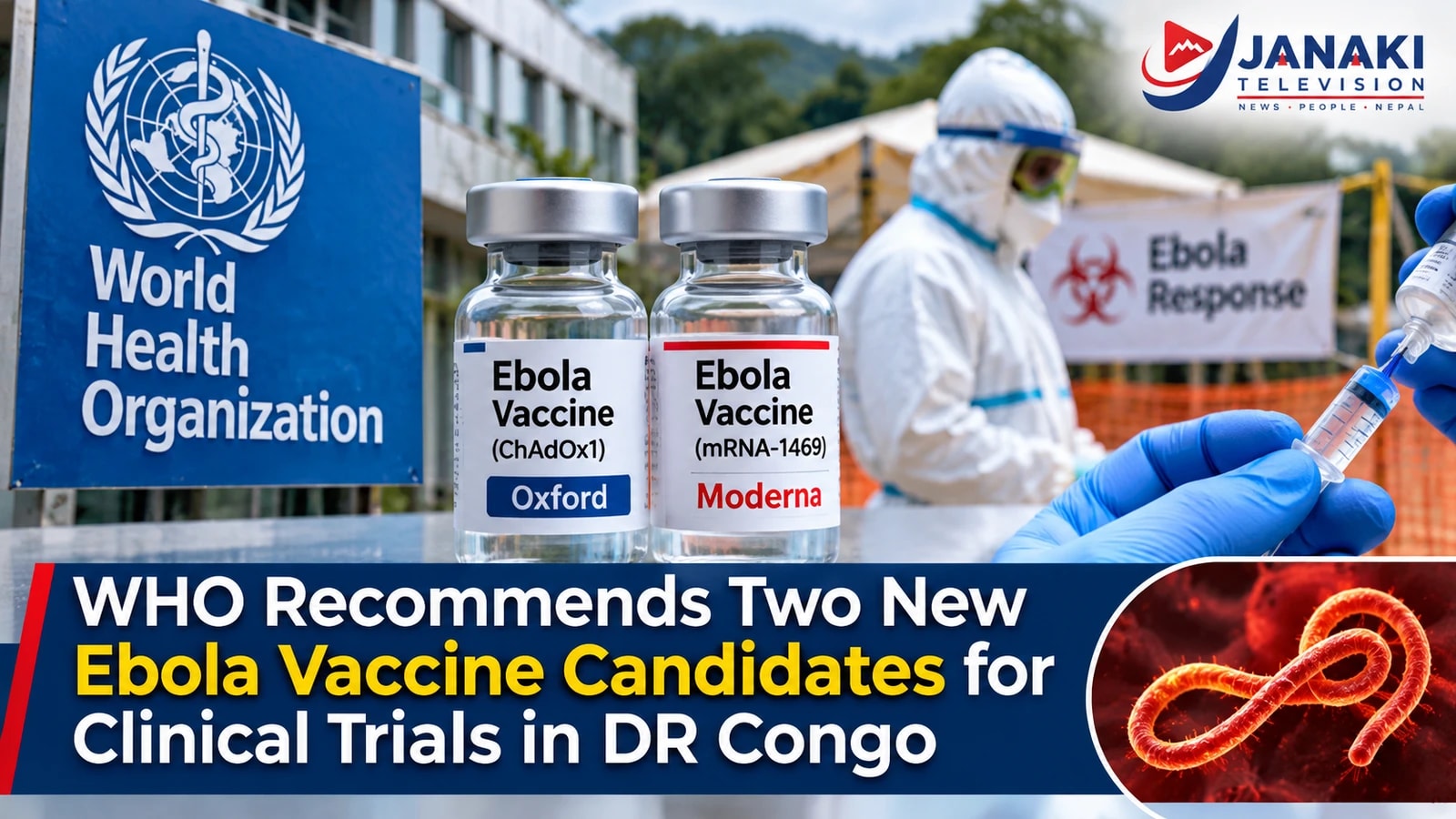
GENEVA. The World Health Organization (WHO) has recommended adding two new experimental Ebola vaccine candidates to an ongoing clinical trial in the Democratic Republic of the Congo (DR Congo), as health authorities intensify efforts to control a deadly outbreak caused by the Bundibugyo virus.
The recommendation, announced on November 4, marks an important development in efforts to develop vaccines specifically targeting the Bundibugyo strain of Ebola. Unlike some other Ebola strains, the Bundibugyo virus does not currently have an approved vaccine specifically designed to prevent the disease.
The two vaccine candidates are ChAdOx1, developed by the University of Oxford in partnership with the Serum Institute of India, and mRNA-1469, developed by US biotechnology company Moderna.
WHO's independent Technical Advisory Group on Candidate Vaccines Prioritization recommended both candidates for further clinical evaluation based on available preclinical and early clinical evidence.
However, the candidates will enter the ongoing trial only after receiving the necessary national approvals. They have not yet been approved for general public use.
Vaccines Designed Specifically for Bundibugyo Virus
The current outbreak is caused by the Bundibugyo virus, a distinct Ebola virus species that has spread across several African countries, with the Democratic Republic of the Congo remaining the main centre of the outbreak.
The existing Ervebo vaccine is approved for protection against the Zaire ebolavirus species, but it is not specifically approved for Bundibugyo virus disease.
The two newly recommended candidates were developed to target the Bundibugyo virus. Their inclusion in clinical research is expected to generate evidence about their safety and effectiveness against the strain responsible for the current outbreak.
The University of Oxford developed the ChAdOx1 candidate in collaboration with the Serum Institute of India, while Moderna developed the mRNA-1469 candidate using messenger RNA technology.
Clinical Trial to Take Place in DR Congo
The two candidates are expected to join the ongoing Tumaini clinical trial in the Democratic Republic of the Congo.
The country's National Institute for Biomedical Research is leading the study in collaboration with the University of Antwerp, WHO, Médecins Sans Frontières, the Africa Centres for Disease Control and Prevention and other international research partners.
The Tumaini trial uses a ring-vaccination approach. Under this method, people who have had contact with confirmed Ebola patients, as well as contacts of those individuals, are identified and enrolled in vaccination groups to assess whether the vaccines can prevent further transmission.
WHO said four vaccination rings had already been established, with several more being prepared.
The trial is designed to evaluate multiple vaccine candidates within a single research framework, helping researchers gather evidence during the ongoing outbreak.
More Than 5,000 Deaths Reported in DR Congo
The vaccine research comes as the Bundibugyo virus outbreak continues to pose a serious public health challenge across parts of Africa.
According to the European Centre for Disease Prevention and Control, the Democratic Republic of the Congo had reported 10,668 confirmed cases and 5,198 related deaths as of November 4, based on data available through November 3.
The outbreak has affected eight provinces in the country. Cases have also been reported in other African countries, including Kenya and Nigeria.
The outbreak has raised concerns among international health authorities because of the absence of licensed vaccines and specific approved treatments for Bundibugyo virus disease.
WHO Calls for Continued Prevention Measures
WHO Director-General Dr Tedros Adhanom Ghebreyesus welcomed the progress in vaccine research, describing the development as an example of scientific collaboration.
He also stressed that vaccines alone would not be sufficient to control the outbreak.
WHO continues to emphasise early medical care, contact tracing, isolation of infected individuals, safe and dignified burials, and community engagement as essential measures to limit transmission.
The organisation is also supporting research into potential treatments, including monoclonal antibodies and antiviral medicines, through separate clinical studies.
Results Expected in 2027
According to WHO, initial findings from the treatment trials are expected in the coming months, while results from the vaccine trial are expected in early 2027.
The new vaccine candidates could provide an additional tool in the fight against Bundibugyo virus disease if clinical research demonstrates that they are safe and effective.
For now, the candidates remain experimental, and researchers will need to complete the necessary clinical evaluations before any decision about wider use can be made.